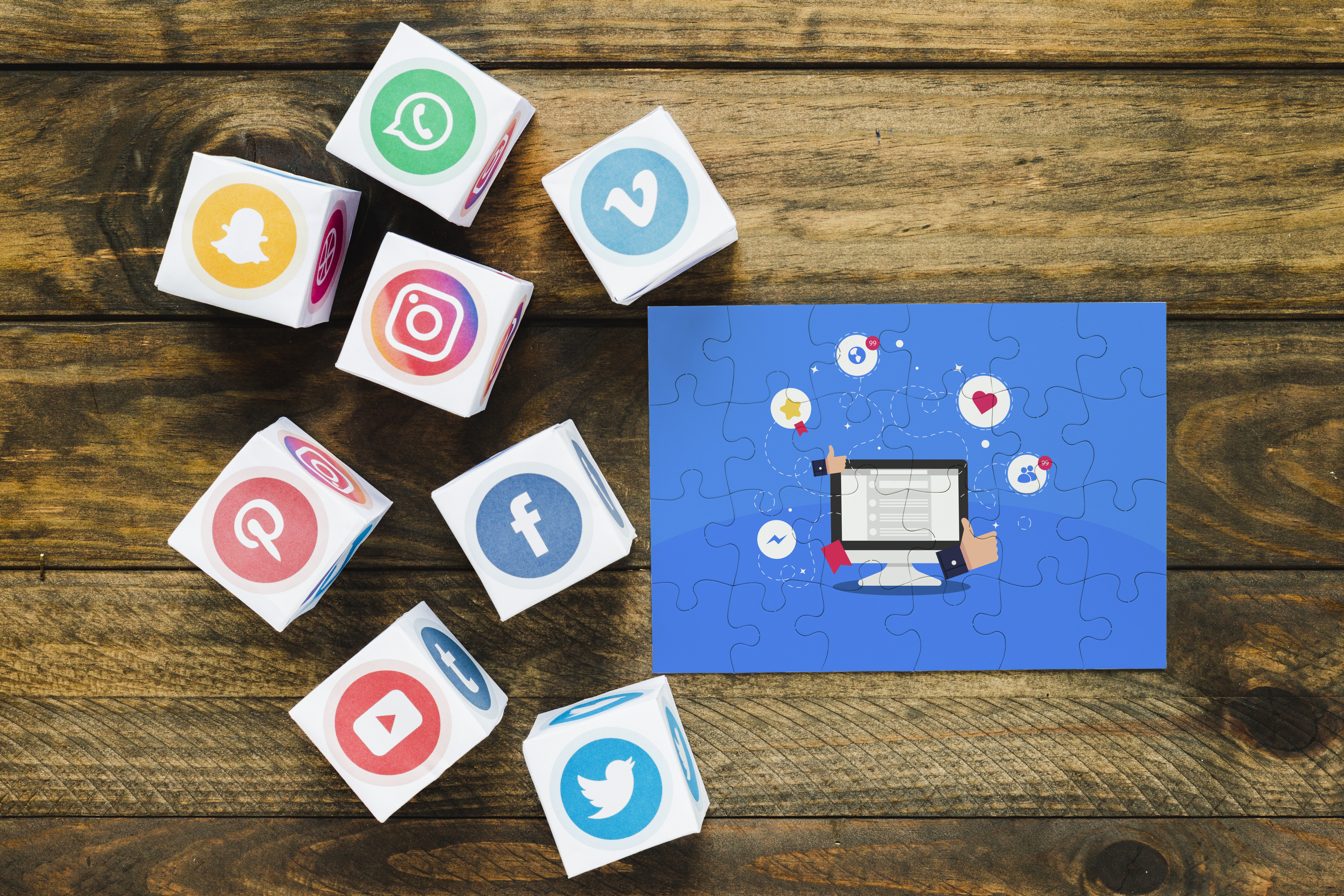
You do not need to be on 24 platforms to grow a brand, but you do need to know what each one is actually good for. This guide walks through 24 social media platforms and apps by the job they do best, so you can pick two or three and put your effort where your audience already is.
The 24 platforms at a glance
Facebook, Instagram and WhatsApp each reach roughly 3 billion people a month, while Mastodon reaches under a million, and both can still be the right choice for the right brand. Audience figures below are approximate monthly active users (MAU) reported by Statista and the platforms themselves as of late 2026; Quora’s figure is monthly unique visitors.
| # | Platform | Audience (approx.) | Best content format | Best for |
|---|---|---|---|---|
| 1 | 3.07B | Groups, video, Reels | Broad reach and community | |
| 2 | 3B | Reels, Stories, carousels | Visual storytelling | |
| 3 | YouTube | 2.6B | Long-form video, Shorts | Search-driven video |
| 4 | TikTok | 2B | Short-form video | Discovery and trends |
| 5 | 3B | Chats, channels, catalogs | Support and direct sales | |
| 6 | 640M | Pins, video Pins | Product discovery | |
| 7 | Quora | 400M | Written answers | Expertise and search traffic |
| 8 | 765M | Discussions | Audience research and trust | |
| 9 | ~433M | Carousels, posts, newsletters | B2B and personal brand | |
| 10 | X (Twitter) | 550M | Short text posts | Real-time conversation |
| 11 | Threads | 500M | Short text posts | Casual brand voice |
| 12 | Bluesky | 10.4M | Text posts, custom feeds | Topic-led niches |
| 13 | Mastodon | 743K | Text posts | Federated communities |
| 14 | Telegram | 1B | Channels, bots | Broadcast updates |
| 15 | Discord | 259M | Servers, voice, events | Private communities |
| 16 | Snapchat | 971M | Snaps, AR lenses, Spotlight | Gen Z reach |
| 17 | Twitch | 240M | Live streams | Live entertainment |
| 18 | Tumblr | 60M | Mixed media, GIFs | Fandoms and creative niches |
| 19 | 1.4B | Official Accounts, mini programs | China market entry | |
| 20 | Douyin | 860M | Short video, live shopping | China video commerce |
| 21 | Kuaishou | 797M | Short and long video, live | Live commerce beyond big cities |
| 22 | 561M | Hashtags, images, video | Trends and influencers in China | |
| 23 | RedNote | 350M | Photo notes, mini vlogs | Product reviews and lifestyle |
| 24 | 520M | Chat, groups, games | Younger Chinese audiences |
How to choose before you read the list
The biggest platform is rarely the best platform for your brand. Before you add a single account, answer three questions.
- Where does my audience already spend time? Look at your analytics, your customer chats and your competitors’ followers. If your buyers are B2B decision-makers, LinkedIn will beat a larger but more casual network.
- What can I create consistently? A brand that posts one useful video a week will beat a brand that posts daily for a month and disappears. Match the platform to the format your team can sustain.
- What am I trying to achieve? Reach, search traffic, leads, customer support and community are different goals, and different platforms serve them. A platform that builds awareness fast may do very little for lead generation.
A useful rule from my SEO work: treat every platform as a discovery channel, not just a posting channel. Some platforms (YouTube, Pinterest, Quora, Reddit) behave like search engines, so the titles, descriptions and keywords you use decide whether people find you months later. Others (TikTok, Instagram, Threads) are driven by recommendation feeds, so the first few seconds or lines decide everything.
Start with two or three platforms, give each at least three months, and review what is working before adding another.
Part 1: The reach giants (platforms 1 to 5)
These five give you the largest audiences and the most formats. They are also the most crowded, so a clear angle matters more here than anywhere else.
1. Facebook
Audience: about 3.07 billion monthly users
Facebook is still the broadest audience you can reach in one place, and it handles almost every format: text, photos, video, Reels, Stories and live streams. Its real strength for brands is community and paid targeting.
- Build a Facebook Group around a problem your customers share, not around your product.
- Use Messenger for quick customer replies.
- Test small ad budgets in Ads Manager to learn which audiences respond before scaling.
SEO angle: Public Page posts and Group discussions can surface in search, so write clear, descriptive first lines instead of vague teasers.
2. Instagram
Audience: about 3 billion monthly users
Instagram is the home of visual storytelling, from Reels and Stories to carousels and live video. It skews toward Gen Z and millennials, which makes it a strong fit for lifestyle, fashion, food, beauty, travel and education brands.
- Switch to a professional account to unlock insights and business tools.
- Lead with Reels for discovery, then use Stories and carousels to deepen the relationship.
- Encourage tags and user-generated content so customers do part of the storytelling for you.
SEO angle: Instagram profiles and captions are searchable, so put your main topic in your name field, bio and the first line of each caption.
3. YouTube
Audience: about 2.6 billion monthly users
YouTube works as both a video platform and a search engine, which gives it a long shelf life. A tutorial published today can keep bringing viewers for years, something a feed-based post rarely does.
- Mix long-form videos (tutorials, explainers, case studies) with Shorts for reach.
- Research the questions your customers type into search and answer them directly.
- Group videos into playlists so one view leads to the next.
SEO angle: Put your target keyword in the title, the first two lines of the description and the video file name, and write a thumbnail that makes a clear promise.
4. TikTok
Audience: about 2 billion monthly users
TikTok rewards content that holds attention, which means smaller accounts can still reach new people if a video resonates. It suits brands that can show a process, a result or a personality in under a minute.
- Open with the payoff or a strong question in the first second or two.
- Join trends only when they fit your message, and add your own angle.
- Post consistently rather than constantly. Buffer’s analysis of 11.4 million TikTok posts found the biggest jump in views came from moving from one post a week to two to five a week.
SEO angle: TikTok is increasingly used as a search tool, especially by younger users, so say your keyword out loud, add it as on-screen text and include it in the caption.
5. WhatsApp
Audience: about 3 billion monthly users
WhatsApp is less about posting and more about conversation. For many businesses it is the fastest route from interest to sale, especially in markets such as Brazil, India and Indonesia where it is part of daily life.
- Use the WhatsApp Business app for a catalog, quick replies and a business profile.
- Send order updates and support answers, and share offers only with people who have opted in.
- Use channels to broadcast news to followers without sharing phone numbers.
SEO angle: Add a click-to-chat link on your website and Google Business Profile so search visitors can start a conversation in one tap.
Part 2: Search and discovery platforms (platforms 6 to 8)
People come to these platforms with a question or a need. That intent makes them especially valuable for brands that care about long-term, search-style visibility.
6. Pinterest
Audience: about 640 million monthly users
Pinterest behaves more like a visual search engine than a social feed. People save ideas they plan to act on, which makes it strong for fashion, home, food, wellness, DIY and travel.
- Create Pins that link to blog posts, product pages or guides.
- Test video Pins. Buffer’s research found they earned higher median engagement than image Pins.
- Organize boards around the keywords your customers search for.
SEO angle: Treat Pin titles, descriptions and board names like page titles and meta descriptions. Pins keep circulating long after you publish them.
7. Quora
Audience: about 400 million monthly unique visitors
Quora is built around questions, so your audience is already telling you what they want to know. Helpful answers can also appear in Google results and keep sending readers for a long time.
- Answer questions where you have real first-hand experience.
- Create a business profile and link to deeper resources only when they genuinely help.
- Disclose your affiliation if you mention your company.
SEO angle: Use Quora to find question phrasing for your blog headings and FAQ sections, and reuse the best answers as the basis for a full article.
8. Reddit
Audience: about 765 million monthly users
Reddit is a collection of thousands of niche communities where people ask for honest opinions. It is less a place to advertise and more a place to listen, learn and earn trust.
- Read the rules of each subreddit before posting, since many limit self-promotion.
- Spend time answering questions and sharing useful resources before you ever mention your brand.
- Mine threads for the exact words customers use to describe their problems.
SEO angle: Reddit threads often rank in Google for product and comparison searches, so the conversations about your category are worth monitoring and joining honestly.
Part 3: Professional and conversation platforms (platforms 9 to 13)
These platforms are built around ideas, opinions and expertise. They work best when your brand has a point of view and a real person behind it.
9. LinkedIn
Audience: about 433 million monthly users
LinkedIn is the leading professional network and a natural home for B2B brands, consultants, recruiters and founders. It is also one of the best places to build a personal brand around your expertise.
- Share what you know through posts, document carousels, newsletters and short video.
- Reply to comments quickly and thoughtfully, since conversation extends the life of a post.
- Post from both the company page and the people who work there. Personal profiles usually earn more engagement.
Buffer’s analysis of content formats found LinkedIn carousels earned the highest median engagement in its dataset, ahead of video, images and text-only posts.
SEO angle: Use your target topics in your headline, About section and newsletter titles so you appear for the searches that matter to your niche.
10. X (formerly Twitter)
Audience: about 550 million monthly users
X remains the place for real-time updates, breaking news and public conversation. It has changed a lot since its rebrand and is divisive for some audiences, but many industries, journalists and communities are still active there.
- Post short, timely commentary and join live conversations around your industry.
- Respond publicly to customer questions, since the whole exchange is visible.
- Check whether your audience is genuinely there before committing time.
SEO angle: Posts and profiles can be indexed, so keep your bio keyword-clear and pin your best piece of content.
11. Threads
Audience: about 500 million monthly users
Threads, built by Meta and connected to Instagram, is a text-first space for casual conversation. It suits founders, creators and brands that want a more relaxed voice than LinkedIn allows.
- Share behind-the-scenes updates, questions and short opinions.
- Use topic tags to help people find your posts.
- Reply to comments. In Buffer’s analysis of more than 128,000 Threads posts, posts where creators replied saw 42% higher engagement than their usual baseline.
SEO angle: Because it links easily to your Instagram profile, Threads is a low-effort way to repurpose short takes from your blog and test which headlines get a reaction.
12. Bluesky
Audience: about 10.4 million monthly users
Bluesky is a decentralized network built on the open AT Protocol. It is much smaller than the big platforms, but its users value control over their feeds and tend to gather around specific topics, including news, tech and creative communities.
- Follow and join custom feeds in your niche before you start posting.
- Share useful links and join conversations rather than broadcasting.
- Consider it an experiment, not a core channel, unless your audience is clearly there.
SEO angle: Custom feeds make topical keywords and hashtags important, so use clear topic language in every post.
13. Mastodon
Audience: about 743,000 monthly users
Mastodon is an open-source network made up of independently run servers, known together as the Fediverse. Each server has its own culture and moderation rules, and the home feed is chronological.
- Pick a server that matches your industry or interests, and read its rules first.
- Introduce yourself and contribute before sharing anything promotional.
- Expect a smaller audience with a stronger sense of community.
SEO angle: It will not drive volume, but links shared by engaged niche communities can bring highly relevant visitors and good-quality mentions.
Part 4: Community and messaging platforms (platforms 14 to 18)
These platforms trade mass reach for closeness. They suit brands that want repeat engagement, loyal fans and direct feedback.
14. Telegram
Audience: about 1 billion monthly users
Telegram started as a messaging app and now works as a broadcast and community platform too. Channels have no limit on subscribers, and groups can hold up to 200,000 members.
- Use a channel for announcements, newsletters, deals and content roundups.
- Add bots to answer common questions, collect feedback or deliver content.
- Remember that standard chats are not end-to-end encrypted by default; only secret chats are.
SEO angle: Telegram is not a discovery engine, so use your website, social profiles and email list to point people toward your channel.
15. Discord
Audience: about 259 million monthly users
Discord began with gamers but now hosts communities for creators, learners, founders and fans. Servers let you organize conversations into channels with roles and permissions.
- Run events such as live Q&As, workshops and feedback sessions.
- Give members early access or exclusive content as a reason to stay.
- Use the server to gather product feedback and support questions in one place.
SEO angle: Discord content is mostly private, so treat it as a retention channel. Turn the best member questions into public blog posts and FAQs.
16. Snapchat
Audience: about 971 million monthly users
Snapchat popularized disappearing content and remains especially strong with younger audiences. Over half of US teens use it, according to Pew Research cited by Buffer, and its AR lenses are a big draw.
- Use branded lenses and Stories to make your brand interactive.
- Share short videos on Spotlight to reach new viewers.
- Keep the tone playful and personal; polished ads tend to feel out of place.
SEO angle: Snapchat is a brand and awareness channel rather than a search channel, so use it to drive younger audiences to a trackable landing page.
17. Twitch
Audience: about 240 million monthly users
Twitch is the best-known live-streaming platform. Gaming is central, but music, art, fitness, tech and talk shows (the Just Chatting category) have strong audiences too.
- Stream on a regular schedule so viewers know when to show up.
- Talk to chat in real time. Interaction matters more than production quality.
- Save highlights and clips to share on other platforms.
SEO angle: Live streams are hard to find through search, so repurpose clips and recaps as YouTube videos and blog posts.
18. Tumblr
Audience: about 60 million monthly users
Tumblr is a long-running microblogging site known for creative freedom, customizable blogs and passionate fandoms. It supports text, images, GIFs, video and audio.
- Use it for moodboards, art, writing and cultural commentary.
- Join existing fandom and interest conversations before pushing your own content.
- Keep your tone authentic. The community is quick to spot overt advertising.
SEO angle: Tumblr blogs are indexable web pages, so descriptive post titles and tags can bring in long-tail traffic for creative niches.
Part 5: The China ecosystem (platforms 19 to 24)
Facebook, Instagram, YouTube and X are restricted in mainland China, so brands that want to reach Chinese audiences use a separate set of platforms. Entering this market usually means local partners, local content and, in some cases, extra business requirements. Plan for that before you invest.
19. WeChat
Audience: about 1.4 billion monthly users
WeChat, from Tencent, began as a messaging app and grew into an all-in-one platform for chat, payments, shopping and services.
- Open an Official Account to publish articles and keep in touch with followers.
- Build a mini program, an app that runs inside WeChat, for bookings, shopping or loyalty.
- Use Moments and partnerships with Chinese influencers to build awareness.
Best for: brands that are serious about the Chinese market.
20. Douyin
Audience: about 860 million monthly users
Douyin is the Chinese version of TikTok, run by ByteDance on a separate network. It is a powerhouse for short video and social commerce, with shopping built into videos, live streams and storefronts.
- Create product demos, tutorials and behind-the-scenes clips.
- Use livestreams to sell directly.
- Expect to work with a local partner or meet additional requirements as an overseas business.
Best for: video-led e-commerce in China.
21. Kuaishou
Audience: about 797 million monthly users
Kuaishou is another major Chinese video platform, known for everyday storytelling and strong creator-audience relationships. It is popular beyond the biggest cities, including smaller cities and rural areas.
- Combine short video, longer video and live streams.
- Focus on trust and community to drive sales through built-in commerce.
Best for: live commerce and reaching audiences outside tier-one cities.
22. Weibo
Audience: about 561 million monthly users
Weibo is a microblogging platform that blends the feel of X and Instagram. It is where trends take off and where many celebrities and influencers run their brand work.
- Use hashtags and trending topics to join public conversations.
- Verify your business account and consider influencer collaborations.
- Target a younger, more trend-driven audience than WeChat.
Best for: entertainment, beauty, fashion and technology brands.
23. RedNote (Xiaohongshu)
Audience: about 350 million monthly users
RedNote, also called Little Red Book, mixes lifestyle content, reviews, product discovery and shopping. Many people use it like a search engine for recommendations, which makes honest reviews and tutorials valuable.
- Publish detailed photo notes and mini vlogs about real product use.
- Work with creators whose followers trust their recommendations.
- Focus on beauty, fashion, wellness, travel and luxury, where the platform is strongest.
Best for: product discovery among Gen Z and millennial shoppers.
24. QQ
Audience: about 520 million monthly users
QQ, also from Tencent, was once China’s leading messaging app. It still holds a loyal base among younger users, gamers and people who want lightweight chat and file sharing.
- Observe interest-based groups around gaming, anime and entertainment to learn how younger audiences talk.
- Treat it as a research channel rather than a major marketing channel.
Best for: understanding younger Chinese audiences.
Starter stacks: which two or three platforms to pick
If the list feels overwhelming, begin with one of these combinations and adjust after three months of data.
| Brand type | Start with | Add later | Why it works |
|---|---|---|---|
| B2B company or consultant | LinkedIn, YouTube | Quora, Reddit | Expertise, trust and long-term search visibility |
| E-commerce or lifestyle brand | Instagram, TikTok, Pinterest | YouTube, Snapchat | Visual discovery and product inspiration |
| Local or service business | Facebook, WhatsApp | Community, reviews and direct enquiries | |
| Creator or personal brand | YouTube, Instagram | Threads, LinkedIn | One deep content hub plus a faster conversation channel |
For each platform you choose, set one goal (for example, newsletter sign-ups or enquiries), one repeatable content format and one metric to review every month.
FAQs about social media platforms
What are the top social media platforms in 2026?
By monthly users, the largest are Facebook (about 3.07 billion), Instagram (about 3 billion), WhatsApp (about 3 billion), YouTube (about 2.6 billion) and TikTok (about 2 billion).
Which social media platform is best for business?
It depends on your audience and goals. LinkedIn suits B2B brands, Instagram and TikTok suit visual and lifestyle brands, Facebook suits community and local businesses, and YouTube and Pinterest suit brands that want long-term search visibility.
How many social media platforms should a brand use?
Two or three is a realistic starting point. A smaller number of platforms done consistently will usually outperform many platforms done occasionally.
Are messaging apps social media platforms?
Increasingly, yes. WhatsApp, Telegram and WeChat now support channels, communities and brand accounts, so they work as social platforms as well as chat tools.
Do I need a presence in China?
Only if China is part of your market. If it is, plan for WeChat, Douyin, Weibo and RedNote, and expect to work with local partners.
Final thoughts
The best social media platform is the one where your audience is active, your team can show up consistently and your goals can be measured. Pick two or three from this list, commit for a quarter, track one clear metric for each and then decide what to keep, change or add. Growth in 2026 comes less from being everywhere and more from being genuinely useful in the right places.






Leave a Reply